As bulas impressas dos medicamentos devem ser substituídas por digitais? SIM

A adoção das bulas digitais nos medicamentos deve ser decidida em breve pela Agência Nacional de Vigilância Sanitária (Anvisa), após a análise das contribuições à consulta pública 1.224/2023.

Esse debate está comprometido pelo clima de “torcida” instaurado na internet, em que leigos exprimem suas preferências, desconsiderando aspectos técnicos e racionais. Eis alguns fatos.

A indústria farmacêutica considera positiva a adoção da bula digital de medicamentos no país, tendo em vista as vantagens que oferece tanto para usuários, órgãos sanitários e setor farmacêutico em termos de qualidade da informação, rapidez de divulgação e simplificação de processos.
Baltimore concentra mortes por oversdose nos EUA

A cidade estabeleceu metas ambiciosas, distribuiu Narcan (um medicamento que reverte o efeito dos opioides) para todos, experimentou maneiras de encaminhar os pacientes para o tratamento e intensificou campanhas para alertar o público.

Mas vieram outras crises, e as autoridades passaram a ter outras preocupações, como a violência e a pandemia da Covid. Muitos desses esforços para combater as overdoses estagnaram, segundo uma reportagem publicada no The New York Times e The Baltimore Banner.

STF abriga disputa bilionária de compra de medicamentos

O medicamento é a imunoglobulina, feito à base de plasma sanguíneo e que pode ser usado no tratamento de diversas doenças, entre elas a Aids e outras imunodeficiências.

A aquisição que está sob disputa pode ultrapassar a cifra de R$ 2 bilhões.

A briga acontece, sobretudo, pela possibilidade ou não de o Ministério da Saúde comprar os medicamentos em licitação com fabricantes que não têm produtos registrados no Brasil pela Anvisa (Agência Nacional de Vigilância Sanitária).

As empresas sem esse registro, que são estrangeiras, argumentam que pode haver uma economia de aproximadamente R$ 1 bilhão na compra.

Brazil already exceeds worst-case forecast for dengue cases this year

Brazil has surpassed its worst-case forecast for dengue cases this year, registering a record 5.5mn infections as health officials and scientists warn that climate change will fuel the global spread of the mosquito-borne virus.

The surge is being driven by hotter weather and the El Niño warming phenomenon in the Pacific Ocean, which have affected the Latin America’s most populous nation for much of the past year, with health experts warning that higher global temperatures will make dengue epidemics more common.

In January, the health ministry warned the number of dengue cases could, in the most extreme scenario, reach 5mn this year. Its average projection was for 3mn cases. Multiple states have introduced emergency measures and vaccination programmes.

GSK’s old foe, uncertainty, comes back to haunt it

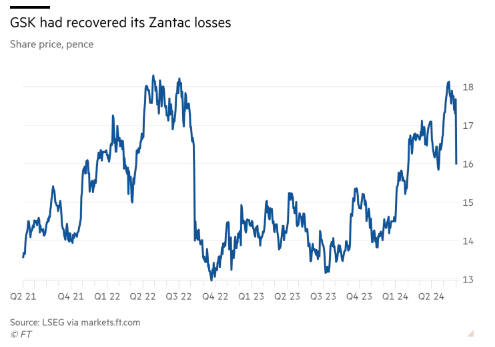
At a key oncology conference in Chicago, GSK presented fresh data on a myeloma medicine it withdrew from the US market in 2022. The UK pharma group hopes recent study data could aid Blenrep’s reintroduction. Instead, investors’ attention was drawn by an unwelcome development further east: a ruling by a judge in Delaware that will expose GSK to jury trials in the state in cases involving its heartburn treatment Zantac.

Concerns over liabilities related to Zantac litigation have dogged GSK’s shares for the past two years, ever since a Morgan Stanley note estimated a product liability of as much as $27bn for GSK. Although analysts’ estimates have come down significantly since, the uncertainty is an unwelcome old foe that chief executive Walmsley can ill-afford, even as she makes progress on the group’s other key challenges.

The Delaware judge ruled that scientific evidence presented by lawyers acting on behalf of plaintiffs who claim a link between the drug and various cancers would be admissible in trials. It does not determine liability or imply the court agrees with the science. But Delaware accounts for about 70,000 of GSK’s remaining 80,000 cases relating to Zantac.

Sanofi pushes ahead with €20bn consumer healthcare spin-off

Sanofi will press ahead with plans for a spin-off of its consumer division, which could be one of Europe’s biggest deals this year, adding bankers to work on a sale process and preparations for a public listing expected to value the business at about €20bn.

Goldman Sachs and Morgan Stanley will work alongside BNP Paribas and Bank of America on a sale and potential float expected to take place as soon as the end of the year, according to people familiar with the matter.